September 18, 2026 at 7:41 AM
AI and the Future of Remote Work: Skills, Jobs, and Career Opportunities
Discover how AI is changing remote work, which skills are becoming valuable, and how remote professionals can prepare for the future of work.
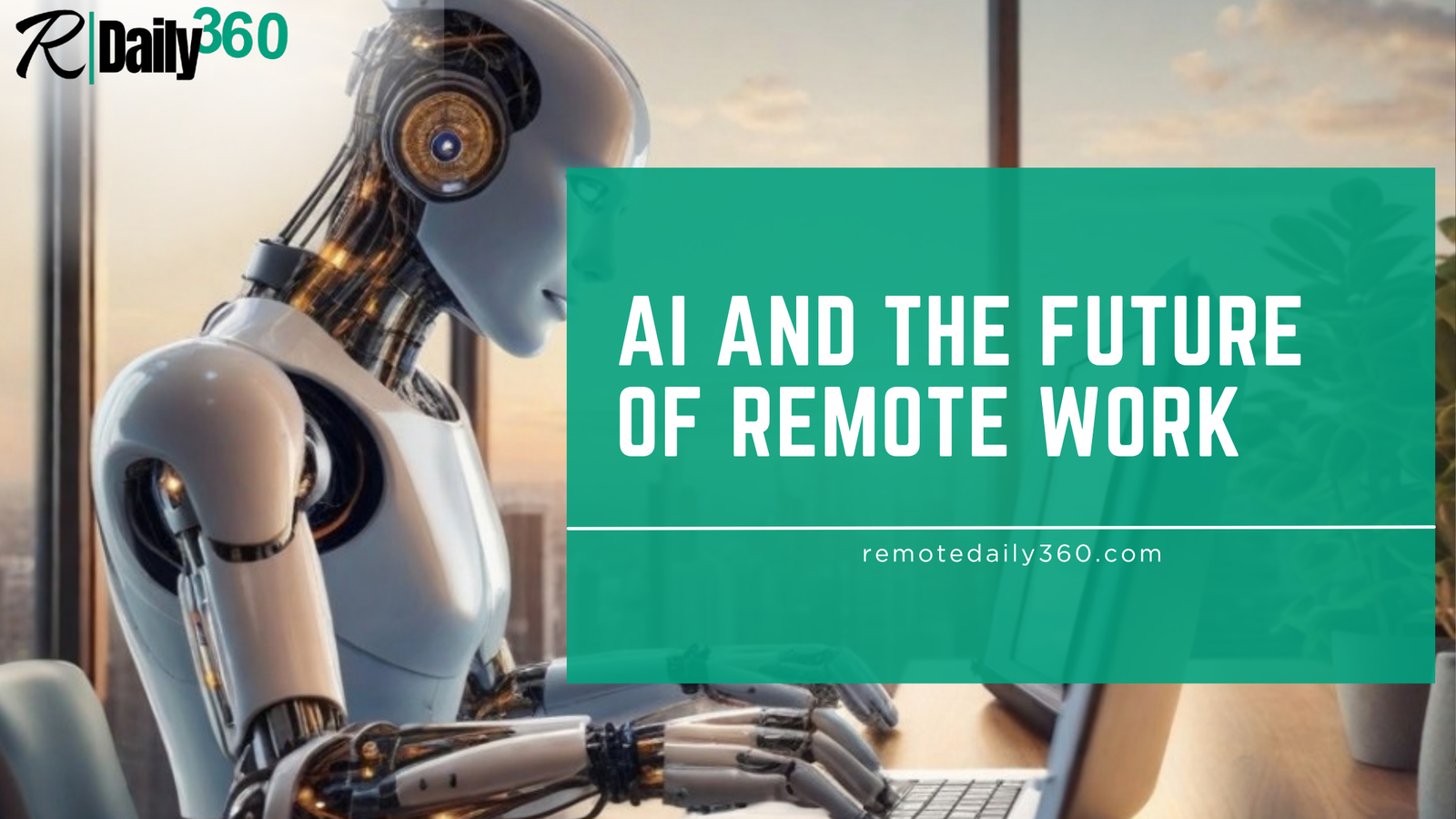
Artificial intelligence is changing how people work.
From software development and marketing to customer support, sales, research, and project management, AI tools are becoming part of everyday workflows. For remote workers, this transformation is particularly important because remote work already depends heavily on digital communication, cloud software, automation, and online collaboration.
The conversation around AI and employment often focuses on one question:
Will AI replace jobs?
But for remote professionals, another question may be more useful:
How will AI change the skills needed to succeed in remote work?
The answer is already becoming visible. AI can automate repetitive tasks, accelerate research, assist with writing and coding, analyze information, and help teams work more efficiently.
At the same time, human skills such as communication, critical thinking, creativity, problem-solving, and decision-making remain important.
For remote workers, the future may therefore be less about choosing between humans and AI and more about learning how to work effectively with AI.
How AI Is Changing Remote Work
Remote work has already transformed how companies operate.
Employees can collaborate with teams across different countries, communicate through digital platforms, manage projects online, and deliver services without being physically present in an office.
AI is adding another layer to this digital workplace.
Remote employees can now use AI to assist with tasks such as:
- Research
- Writing and editing
- Data analysis
- Software development
- Meeting summaries
- Customer support
- Project management
- Content creation
- Lead research
- Workflow automation
- Documentation
Instead of manually completing every part of a process, employees can delegate certain repetitive or time-consuming tasks to AI while focusing on work that requires human judgment.
Will AI Replace Remote Jobs?
AI will likely change many jobs, but job transformation is broader than simple job replacement.
A single job can contain dozens of tasks. Some of those tasks may be suitable for automation, while others require communication, creativity, context, responsibility, or human judgment.
For example, a software developer may use AI to generate boilerplate code or identify potential bugs. The developer still needs to understand the application, review the generated code, test it, and make architectural decisions.
Similarly, a marketing professional can use AI to generate ideas and analyze data, but still needs to understand the customer, brand, market, and business objectives.
This means professionals should not think of AI only as a competitor.
It can also become a productivity tool.
AI Skills for Remote Jobs
You don't need to become an AI researcher to benefit from artificial intelligence.
AI skills are becoming relevant across many different remote careers.
1. AI Skills for Developers
Software developers can use AI coding assistants to:
- Generate code
- Explain unfamiliar code
- Debug applications
- Write tests
- Refactor code
- Generate documentation
- Explore APIs
- Build prototypes
However, programming fundamentals remain important.
Developers need to understand the code they use and verify AI-generated results before deploying them.
2. AI Skills for Marketers
Remote marketing professionals can use AI for:
- Content research
- Keyword research
- Content outlines
- Customer analysis
- Campaign ideas
- Email personalization
- Social media planning
- Performance analysis
The important skill isn't simply knowing how to generate content.
It's knowing how to use AI while maintaining quality, accuracy, originality, and a clear marketing strategy.
3. AI Skills for Customer Support
AI can assist remote customer support teams by:
- Answering frequently asked questions
- Summarizing conversations
- Categorizing tickets
- Finding relevant information
- Suggesting responses
- Routing requests
Human support representatives can then focus on complicated problems and situations that require judgment and empathy.
4. AI Skills for Sales Professionals
Sales teams can use AI for:
- Lead research
- Prospecting assistance
- CRM data entry
- Email personalization
- Meeting summaries
- Follow-up preparation
- Sales analysis
This can reduce administrative work and give sales professionals more time for conversations with potential customers.
5. AI Skills for Project Managers
Project managers working remotely can use AI to help with:
- Meeting summaries
- Task organization
- Project documentation
- Status reports
- Planning
- Risk identification
- Communication
The project manager remains responsible for coordinating people, understanding priorities, and making decisions.
The Most Important Remote Work Skill: Adaptability
AI tools are changing quickly.
A tool that is popular today may not be the tool professionals use next year.
For this reason, learning one particular AI application is less important than developing the ability to learn and adapt.
Remote professionals should become comfortable with:
- Evaluating new AI tools
- Testing AI workflows
- Writing effective prompts
- Checking AI-generated information
- Automating repetitive tasks
- Integrating AI into existing workflows
- Understanding the limitations of AI
This creates a more sustainable skill set.
Instead of asking:
"Which AI tool should I learn?"
Consider asking:
"Which problems can I solve better with AI?"
Human Skills Still Matter
The growth of AI does not make human skills irrelevant.
In many situations, AI makes human judgment even more important.
Remote employers still need people who can:
- Communicate clearly
- Solve complex problems
- Think critically
- Understand customers
- Collaborate with teams
- Make decisions
- Manage projects
- Take responsibility
- Adapt to changing situations
AI can produce an answer.
A professional still needs to determine whether that answer is correct and useful.
How to Become an AI-Powered Remote Worker
Remote professionals don't need to learn every AI tool available.
A better approach is to start with your existing work.
Step 1: Identify repetitive tasks
Look at your daily work and identify tasks that consume significant time.
Step 2: Find AI opportunities
Ask whether AI can help with research, writing, analysis, organization, or automation.
Step 3: Test the workflow
Start with low-risk tasks and compare the AI-assisted workflow with your existing process.
Step 4: Verify the results
Don't assume AI output is automatically correct.
Review facts, calculations, code, recommendations, and other important outputs.
Step 5: Measure the improvement
Ask whether the workflow actually saves time, improves quality, or increases productivity.
Step 6: Build a portfolio
If you are looking for remote jobs, document practical examples of how you have used AI to solve problems.
Employers may find real-world results more useful than a simple list of AI tools.
How AI Could Affect Remote Hiring
AI may also change how companies evaluate candidates.
Instead of simply asking whether someone knows a particular software tool, employers may increasingly look at how candidates use technology to solve problems.
For example, consider two candidates:
Candidate A:
"I know several AI tools."
Candidate B:
"I built an AI-assisted workflow that reduced a repetitive reporting process from two hours to twenty minutes."
The second statement demonstrates an actual application of AI.
For remote job seekers, building small AI projects, automation workflows, or AI-assisted processes can therefore become a useful way to demonstrate practical skills.
AI and the Growth of Remote Careers
AI is not limited to traditional technology jobs.
Professionals across different industries can incorporate AI into their workflows.
This could create opportunities for people who combine:
Industry knowledge + AI skills + communication + problem-solving
For example:
- An accountant who understands AI-assisted financial workflows
- A recruiter who uses AI for candidate research and organization
- A marketer who uses AI for campaign analysis
- A developer who builds AI-powered applications
- A customer support specialist who understands AI-assisted support systems
- A project manager who uses AI to improve project operations
The combination of domain expertise and AI skills can be valuable across many remote career paths.
How Remote Job Seekers Can Prepare for the Future
If you're searching for remote jobs, now is a good time to consider how AI fits into your career.
Start with these five areas:
Learn AI Fundamentals
Understand concepts such as generative AI, large language models, AI agents, automation, and AI-assisted workflows.
Learn Tools Relevant to Your Career
Choose AI tools based on the work you want to do rather than trying to learn every new application.
Build Practical Projects
Create projects that demonstrate how you use AI to solve real problems.
Learn Automation
Understanding how different applications can work together can help you build more efficient workflows.
Continue Developing Human Skills
Communication, critical thinking, creativity, and problem-solving remain important in an AI-assisted workplace.
The Future of Remote Work Will Be AI-Assisted
The future of remote work is likely to involve more AI-powered tools and workflows.
Some repetitive tasks may become automated. Other jobs may change significantly as employees gain access to better AI tools.
For workers, the important response is not simply to learn AI because everyone else is doing it.
The goal should be to understand where AI can create real value in your work.
The professionals who combine their existing expertise with AI capabilities can build new ways of working, improve productivity, and adapt as technology continues to evolve.
AI is not simply changing where people work.
It is changing how work gets done.
And for anyone building a remote career, learning how to work effectively with AI is becoming an increasingly important skill.
Frequently Asked Questions
Will AI replace remote jobs?
AI can automate certain tasks within jobs, but the impact varies by occupation and task. Many remote professionals can use AI as a productivity tool while continuing to handle work requiring human judgment, communication, creativity, and responsibility.
What AI skills are useful for remote jobs?
Useful skills include AI-assisted research, prompt writing, AI productivity tools, workflow automation, data analysis, AI-assisted coding, content generation, and the ability to evaluate AI-generated results.
Do I need to be a programmer to work with AI?
No. AI tools are increasingly used in marketing, sales, customer support, administration, recruitment, design, research, and other fields. The relevant skills depend on the type of remote work you want to pursue.
How can I prepare for the future of remote work?
Start by learning AI fundamentals, identifying repetitive tasks in your work, experimenting with relevant AI tools, developing automation skills, building practical projects, and continuing to strengthen communication and problem-solving skills.
Are AI skills important for remote job seekers?
AI skills can help candidates demonstrate that they can work effectively with modern digital tools. The importance of specific AI skills varies by role and employer.
What are the best AI tools for remote workers?
The appropriate tools depend on the job. Developers, marketers, designers, recruiters, sales professionals, and project managers may require different AI tools. Focus on tools that solve specific problems in your workflow rather than collecting tools without a clear purpose.